LESSON 11.03 · 40 MIN PRACTICE
EQ, compression, and de-essing with restraint
Equalization shapes frequency balance. Compression reduces level differences according to its settings. De-essing controls excessive sibilance. Each tool should solve a specific audible problem.
Clip consistency›Corrective EQ›Gentle dynamics›Level-matched review
Conceptual workflow · read from left to right
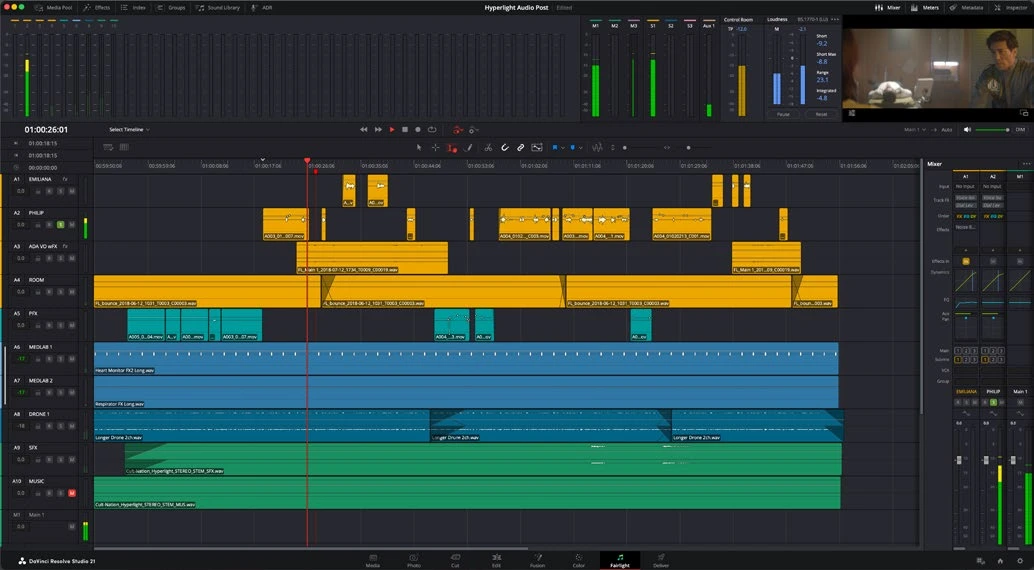
ACTUAL RESOLVE INTERFACEView full size ↗
Work through it
- Choose a dialogue passage and match listening levels when comparing processed and unprocessed sound. Louder often seems better even when quality has not improved.
- Use EQ to address a clear problem such as rumble or boxiness. Make small changes and check the voice does not become thin or unnatural.
- Add gentle compression. Observe gain reduction on louder phrases, then adjust threshold, ratio, attack, and release while listening to consonants and the return to quieter words.
- Use de-essing only if sharp sibilants remain distracting. Check that words do not become dull or lisped. Recompare the bypassed signal at similar perceived loudness.
Your turn
Build a modest dialogue chain and explain the purpose of each processor. Export a before/after comparison with matched perceived levels.
QUICK KNOWLEDGE CHECK
Why level-match a before/after comparison?
Your notes
Write down what worked, what surprised you, and what to try next. Saved on this device.
Original practical lesson · Open the in-house resource shelf for practice files and definitions. Completion records your self-assessment, not certification.