LESSON 12.03 · 45 MIN PRACTICE
Loudness, true peak, and specification-driven mixing
Peak level and perceived loudness are different measurements. Integrated loudness describes a program over time; true peak estimates intersample peaks. The destination’s specification determines your targets.
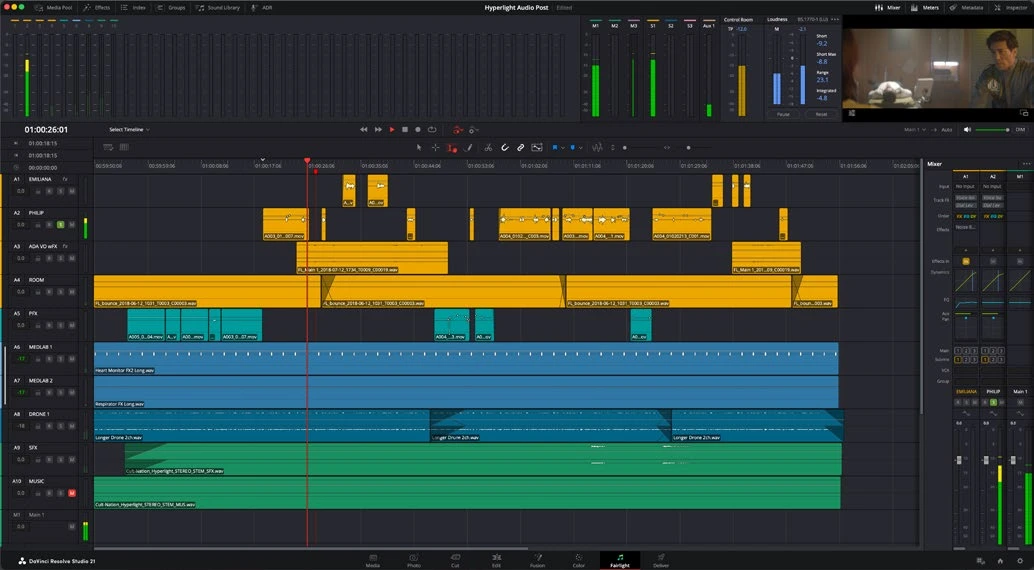
ACTUAL RESOLVE INTERFACEView full size ↗
Work through it
- Write the receiving platform or client’s actual loudness and peak requirements. Do not assume one LUFS number is correct for every delivery.
- Insert or use the appropriate loudness meter on the final mix path. Reset it, then play the entire program so the integrated reading covers the real content.
- Adjust the mix and output control deliberately. Use limiting where appropriate to meet peak constraints, but listen for pumping, flattened impacts, and distortion.
- Render the intended audio format and measure the exported file again. Check channels, sample rate, duration, and beginning/end silence alongside the loudness reading.
Your turn
Choose an explicit practice target and label it as your exercise specification. Measure a full mix, revise it, and record the final integrated loudness and true-peak result.
QUICK KNOWLEDGE CHECK
Why measure the whole program for integrated loudness?
Your notes
Write down what worked, what surprised you, and what to try next. Saved on this device.
Original practical lesson · Open the in-house resource shelf for practice files and definitions. Completion records your self-assessment, not certification.