LESSON 14.03 · 40 MIN PRACTICE
Crop, local corrections, and a coherent photo series
A strong still has a clear visual hierarchy. Cropping directs attention; local corrections support the subject; matching makes a series feel intentional without making all images identical.
ACTUAL RESOLVE INTERFACEView full size ↗
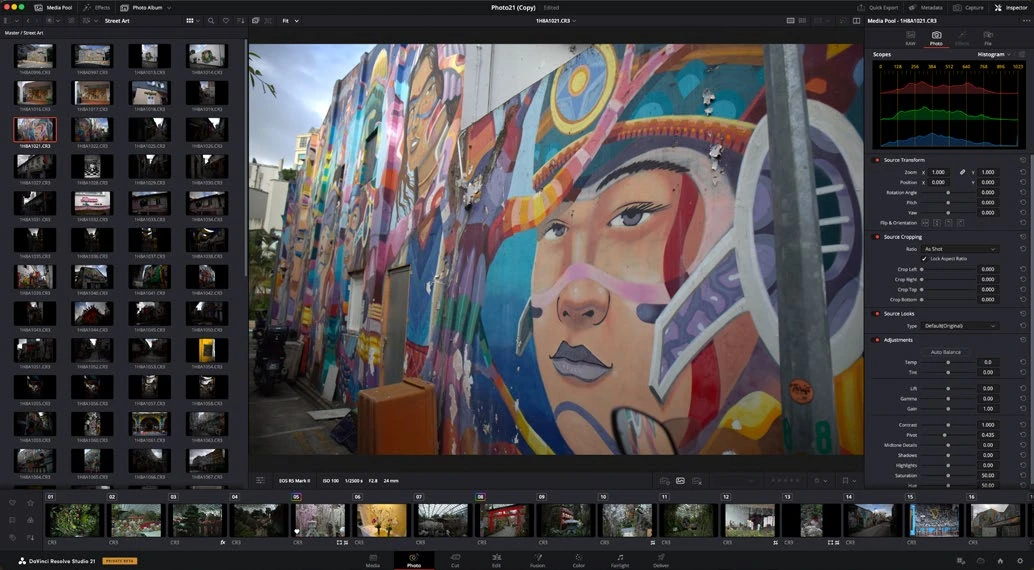
Work through it
- Choose a crop based on the final use: landscape presentation, square layout, or portrait. Preserve the important subject and inspect edges for distracting fragments.
- Apply a base balance, then use soft local corrections to guide attention. Keep a dedicated node for each meaningful adjustment so revisions stay clear.
- Match the series using a representative image. Compare skin, neutrals, and contrast while respecting differences in lighting and composition.
- Review the set as a group and at full image size. Look for over-sharpened edges, halos, inconsistent saturation, or a crop that breaks the sequence’s visual rhythm.
Your turn
Finish three photographs as a small series with one shared look. Include at least one local adjustment and explain its purpose.
QUICK KNOWLEDGE CHECK
What should a local correction accomplish?
Your notes
Write down what worked, what surprised you, and what to try next. Saved on this device.
Original practical lesson · Open the in-house resource shelf for practice files and definitions. Completion records your self-assessment, not certification.